If the over-the-air updates aren’t arriving to your Pixel phone fast enough and you can’t stop checking the system update menu, there’s a new way to install updates manually: Google’s repair tool. All you need is a web browser, a USB cable and a computer, as 9to5Google reports, instead of the previous method that made you install a chunk of Android’s software development kit and type text commands into a terminal just to sideload an update onto your phone.
The process is not without some risk, so you’ll want to read these step by step instructions carefully. You’ll need a Pixel 3 or newer phone with Android 10, and a computer with a browser version that supports WebUSB, including the latest versions of Chrome, Edge, or Opera, to make it...
Oculus’s newest update for its wireless Oculus Quest VR headset should make tracking your hands in virtual reality without a controller much easier (via UploadVR).
Controller-free hand tracking was first rolled out for Quest headsets in December, but it users had to manually toggle it on and off from the main menu each time they wanted to use it. After installing the new “v13” update, though, if you have controller-free hand tracking switched on in your Oculus Quest’s settings menu, you should just be able to put your Touch controllers down to have your Quest start tracking your hands.
We haven’t been able to test the feature ourselves, but you can get an idea of what it’s supposed to look like in this video from UploadVR:
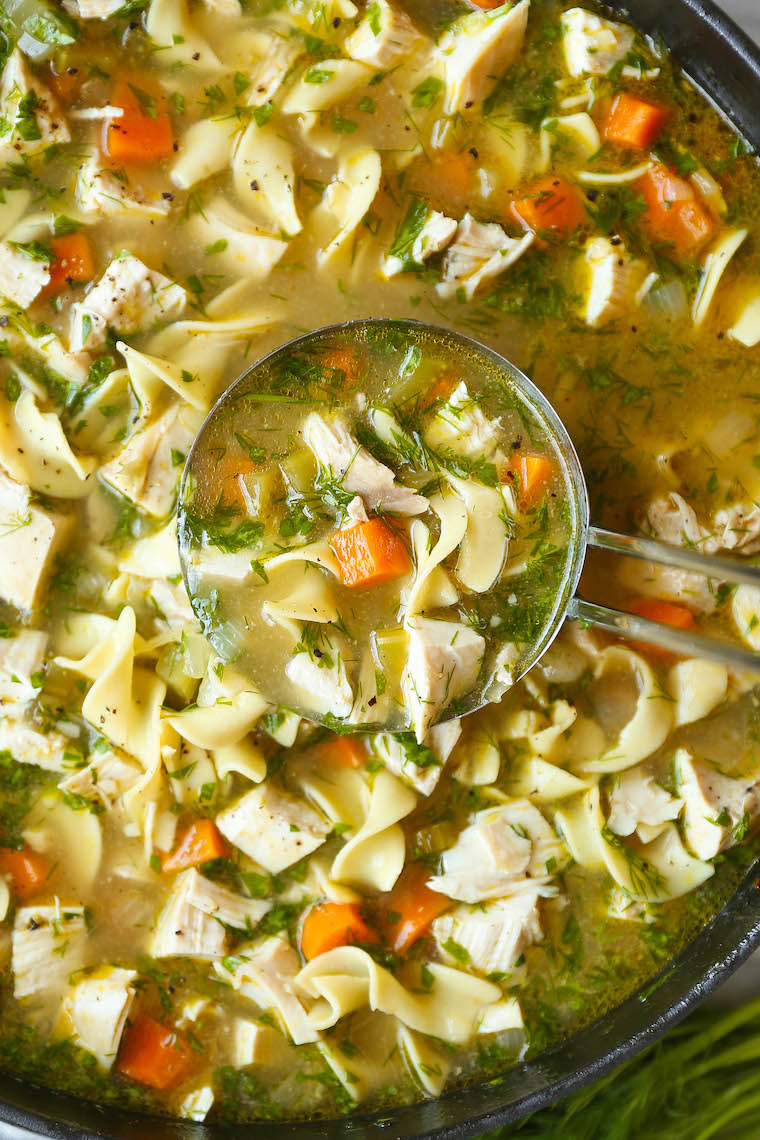
It’s the dead of winter. 33 degrees F all week. Snow and ice piles everywhere. And it’s only January, meaning we basically have about 3-4 months of winter left.And now that I am officially a Midwest resident, that basically translates to having this chicken noodle soup on the regular all. winter. long. It’s so warm, so cozy, and so soothing during these chilly nights.
Now this recipe uses bone-in, skinless chicken breasts which means it will take a little longer than usual for the chicken to cook through.
But don’t worry, it yields the most flavorful stock and the most tender chicken bites (so it’s absolutely worth the extra time), doctored up with fresh dill and freshly squeezed lemon juice for a little bit of jazz. SO SO GOOD.
INGREDIENTS:
2 tablespoons unsalted butter
1 onion, diced
2 carrots, peeled and diced
2 stalks celery, diced
3 cloves garlic, minced
8 cups chicken stock
2 bay leaves
Kosher salt freshly ground black pepper, to taste
2 1/2 pounds bone-in, skinless chicken breasts
2 1/2 cups wide egg noodles
2 tablespoons chopped fresh parsley leaves
2 tablespoons chopped fresh dill
1 tablespoon freshly squeezed lemon juice, or more, to taste
DIRECTIONS:
Melt butter in a large stockpot or Dutch oven over medium heat. Add onion, carrots and celery. Cook, stirring occasionally, until tender, about 3-4 minutes. Stir in garlic until fragrant, about 1 minute.
Whisk in chicken stock and bay leaves; season with salt and pepper, to taste. Add chicken and bring to boil; reduce heat and simmer, covered, until the chicken is cooked through, about 30-40 minutes. Remove chicken and let cool before dicing into bite-size pieces, discarding bones.
Stir in chicken and pasta and cook until tender, about 6-7 minutes.
Remove from heat; stir in parsley, dill and lemon juice; season with salt and pepper, to taste.
Hainanese chicken rice is one of the greatest dishes in the world, beloved by almost everyone who tries it. It’s not too spicy, not too fancy, just universally loved comfort food that any palate can enjoy. It’s also one of the hardest dishes to find at a restaurant; even if you live in NYC or LA, there are only a handful of places specializing in Hainanese chicken rice at most, and decent ones even less. Thankfully though, Hainanese chicken rice is super easy to make at home.
Because it’s traditionally a street food, Hainanese chicken rice is made by cooking the rice and chicken separately, then serving on a platter along with multiple sauces, soup, and cucumbers. It’s done this way because when serving hundreds of customers, separating out the components and cooking them separately means you can make more at once. At home though, this one pot, one bowl version just makes sense, and it’s easily just as delicious as the best versions you’ll find.
How to make Hainanese Chicken Rice
At its heart, Hainanese chicken rice is rice that’s been lightly sautéed with aromatics and cooked in a chicken broth with green onions and ginger, then served with perfectly poached chicken and a variety of sauces. If you want to make it the right way, you cook the chicken first with green onions and ginger, then use the resulting broth to make the rice.
Of course, every family tweaks the recipe to their own liking, and we’re no different. In all the years we’ve made it, our (not-so-uncommon) family trick is to sauté the rice in chicken fat for extra chicken-y goodness. This makes the rice glossy and rich, and irresistibly good. We also serve ours with green onion oil instead of the usual ginger-garlic sauce.
What is Bibimbap?
Bibimbap is a Korean rice dish which is essentially a bowl of rice with vegetables and meat and gochujang (a fermented chili sauce). The whole thing is presented as a beautiful, composed bowl, then mixed at the table before eating. If the whole thing is presented in a hot stone bowl and you get crispy rice at the bottom, that’s dolsot bibimbap. Both versions are utterly delicious.
We’re calling the way we serve this Hainanese chicken rice “bibimbap-style” because it ticks all the marks of a good bibimbap: a warm rice bowl topped with cold veg, bite-sized chunks of meat (chicken) and topped with an egg and chili sauce. It’s truly the best way to eat Hainanese chicken rice because every bite is a perfect bite of rice, chicken, veg, and sauce. Especially if you’re hungry, you can spoon in the goodness as fast as possible without messing around with multiple utensils.
the best kinds of food! I can’t believe Christmas is over for another year and the new year is fast approaching. We’re getting into deep winter. It’s super cold outside and all I want to do is hibernate and eat all the cozy winter foods. I think I’m pretty much in love with winter because it means there’s lots of staying inside, keeping warm, and eating. The name of the game is keeping warm and the best way to keep warm is to eat spicy things, am I right?
One of my all time favorite spicy things to eat is sundubu jjigae, or spicy tofu stew. It’s super easy to make, once you have all the ingredients and it comes together in a flash.
What is Sundubu Jjigae/Spicy Kimchi Soft Tofu Stew?
One of my all time favorite spicy things to eat is sundubu jjigae, or spicy tofu stew. It’s super easy to make, once you have all the ingredients and it comes together in a flash.
What is Sundubu Jjigae/Spicy Kimchi Soft Tofu Stew?
Sundubu jjigae is a korean stew that’s made with soft tofu. In Korean, sundubu is soft tofu and jjigae is stew, thus soft tofu stew! I kind of think of it more as soup then stew but I guess that’s a question of what one considers a soup versus a stew. Anyway, the soft tofu that’s used in this stew is the kind that comes in a tube, not the kind that’s in a rectangle/square. It’s extra soft, really mild and so good. You’ll find it at the Asian grocery store in the tofu section, next to all the tofus. It pairs perfectly with the spiciness of the soup, adding a kind of cooling counterpoint to the spiciness. Sundubu is super warming, comforting, and perfect for winter.
Sundubu jjigae is a korean stew that’s made with soft tofu. In Korean, sundubu is soft tofu and jjigae is stew, thus soft tofu stew! I kind of think of it more as soup then stew but I guess that’s a question of what one considers a soup versus a stew. Anyway, the soft tofu that’s used in this stew is the kind that comes in a tube, not the kind that’s in a rectangle/square. It’s extra soft, really mild and so good. You’ll find it at the Asian grocery store in the tofu section, next to all the tofus. It pairs perfectly with the spiciness of the soup, adding a kind of cooling counterpoint to the spiciness. Sundubu is super warming, comforting, and perfect for winter.
What special ingredients do I need?
Well, the truth is, you will need some special ingredients. But once you have the core ingredients, it’s really easy to make this stew all the time. If your pantry’s stocked with dashi and gochugaru and you’re pretty much good to go; you’ll just need kimchi and tofu, which are pretty much available at most grocery stores these days.
Dashi – Technically, sundubu uses a Korean anchovy stock, made from tiny dried anchovies, but we’re going to use Japanese instant dashi. If you want to be as close as you can to the Korean anchovy stock, go for iriko or niboshi dashi which is the Japanese equivalent. If you can’t find iriko/niboshi dashi, regular dashi (which is made from dried bonito and kombu) will be just as delicious. Instant dashi is readily available online at at Asian grocery stores. It’s really easy to make – it either comes in granules that dissolve in hot water or in a tea bag that you soak.
Gochugaru – Korean red chili pepper flakes are coarsest ground red pepper that are not anything like those red pepper flakes you see in shakers at Italian restaurants. Instead of seeds and skins, they’re more of a flake/powder. The taste hot, sweet, and a little bit smoky. It’s pretty much used in all Korean cooking, so if you’re planning on diving into Korean food, it’s a pantry must. They sell it at Asian grocery stores and online.
For the tofu and kimchi, you’ll be able to find these almost anywhere but if you’re at the Asian grocery store, be sure to pick up sundubu, which is soft tofu found in a tube. You can definitely just use whatever tofu you like and it’ll taste good, but if you’re going for a classic sundubu, the tube tofu is what you want. As for kimchi, there are a ton of brands out there. I tend to always buy a Korean brand, just cause, well, kimchi is Korean!
Substitutions If you want this spicy soup but don’t have time/want to make the effort, you can cheat it a little. Use chicken stock instead of dashi, regular tofu instead of soft tofu, and whatever sort or protein you want. Sundubu is pretty much with all proteins, from seafood to chicken, so you can feel free to go wild.
What to eat it with It usually comes with a bowl of rice and, if you’re lucky, a raw egg that’s dropped right into the boiling hot soup. I like it on it’s own too, when I’m going low-carb. And when I’m not, I’ve been known to have it with noodles or even pasta!
Happy 2020! How is the new decade treating you so far? Mike and I rung in the new decade in Tokyo with a quick little lucky trip to the local shrine right after midnight. I almost didn’t make it because of jetlag, but thankfully I managed to wake up from the nap that I took (I know, I know, you’re really not supposed to nap if you don’t want jetlag). Now, we’re eating up a storm and the fact that I did keto is a far away dream way back in 2019.
Still, I know that if we were back home and not in the land of the most delicious food ever, I’d probably have my eye on a bunch of healthy, easy to make recipes. Recipes that would help me feel just a little bit better about all the fluff I packed on from holiday eating. Recipes to give me energy and zip. This is one of those recipes and something that I ate all the time when I was doing keto in the summer.Trader Joe’s cauliflower gnocchi is still very much a thing in our home because I just love those little chewy-fluffy-crispy-on-the-outside dumplings. I still think the best way ever to make them is to just fry them up, frozen, in a non-stick pan with a little bit of fat. Not letting them defrost or boiling them means they don’t get gummy, which is what I hear that a lot of people are afraid about.
For crispy fluffy cauliflower gnocchi, just pan-fry, pure and simple. It takes mere minutes then you have a blank slate canvas for flavor. If you have pesto at home, toss the little guys in the pesto and enjoy with a jammy egg for some protein. Quick, easy, delicious. Everything in 2020 should be this perfect!
 TIMOTHY A. CLARY/AFP via Getty Images